Customers are asking ChatGPT which businesses to hire, where to shop, and who to trust. Here's how to help your business become easier for AI to find and recommend.
Imagine someone in your city needs a plumber. Instead of searching Google and clicking through several websites, they open ChatGPT and ask, "Can you recommend a reliable plumber near me who can repair a water heater?" ChatGPT might return several businesses, explain what they offer, and link to their websites. Now imagine your company is one of those recommendations. That's the opportunity small business owners are beginning to explore with AI-powered search.
But how does your business get mentioned by ChatGPT? Can you pay to appear? Does your website need special code? And what can you do if ChatGPT never mentions your company? Let's break it down.
Can ChatGPT Recommend Local Businesses?
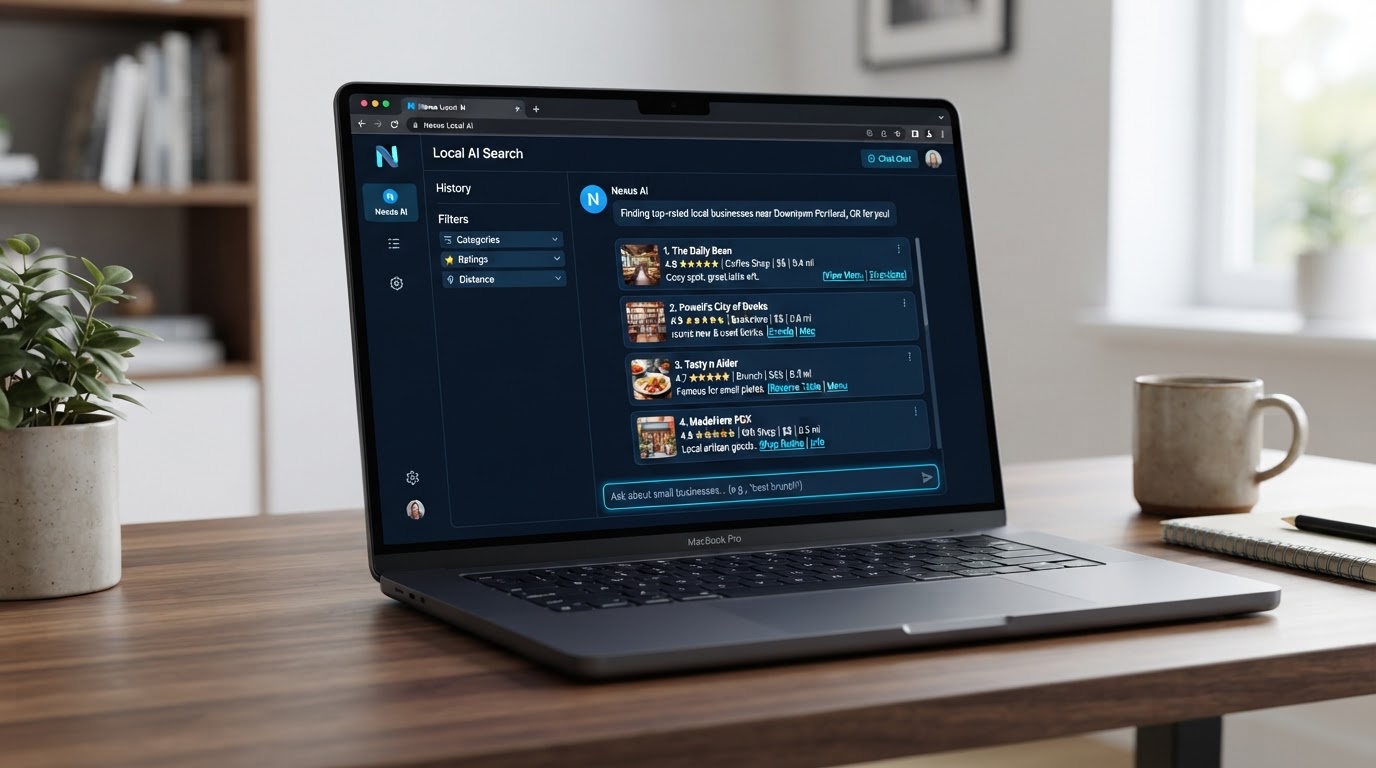
Yes. ChatGPT can help people discover businesses by using available information, including web search results when search is enabled. Someone might ask who installs solar panels near them, what's a good orthodontist for teenagers, whether you can recommend an accountant who works with small businesses, which landscaping companies offer sprinkler installation, or who builds affordable websites for small businesses. Depending on the question, location information, and available sources, ChatGPT may suggest businesses that appear relevant. It can also link to websites so people can learn more.
However, ChatGPT recommendations aren't guaranteed or permanent. A different question might produce a different list.
How Does ChatGPT Find Businesses to Recommend?
ChatGPT doesn't have a single public list of the best businesses in every city. When ChatGPT uses web search, it can find and summarize information from online sources. That information may include business websites, relevant articles, listings, reviews, and other publicly available sources.
For example, imagine two companies offer the same service. The first website says, "Welcome to our company. We offer excellent solutions and outstanding customer service." The second says, "We install and repair residential sprinkler systems in Phoenix, Arizona. Our services include broken sprinkler heads, irrigation leaks, and new sprinkler system installation." Which website makes it easier to understand what the business actually does? The second one. Clear information can help search tools understand whether a company matches someone's question. It doesn't guarantee a recommendation, but it's a good place to start.
1. Make Sure ChatGPT Can Find Your Website
Before worrying about keywords or AI recommendations, make sure your website is publicly accessible. OpenAI uses a web crawler called OAI-SearchBot to help discover content for ChatGPT search. If your website blocks that crawler, its content may not be available for inclusion in ChatGPT search summaries. Ask your website provider or developer to check your robots.txt file and security settings. You should also make sure your important pages aren't accidentally hidden from search engines. You don't need special AI software just to make your website accessible.
2. Clearly Explain What Your Business Does
Your homepage should answer three simple questions: What does your company do? Who does it help? Where does it provide services? Here's an example. Instead of, "Welcome to ABC Services. Quality You Can Trust," try, "ABC Services provides residential plumbing, water heater repair, and drain cleaning throughout the Denver metro area." Your homepage should give visitors an immediate understanding of your business. That makes your website more helpful to both people and search tools.
3. Create a Page for Each Important Service
Let's say you own a home remodeling company. Your services include kitchen remodeling, bathroom remodeling, basement finishing, and home additions. Rather than putting everything on one page, consider creating helpful pages for each major service. A kitchen remodeling page could explain what types of projects you handle, how your remodeling process works, common questions about timing and costs, which communities you serve, and how customers can request an estimate. The goal isn't to create dozens of nearly identical pages. It's to provide useful details about the services people are looking for.
4. Answer the Questions Your Customers Ask
One of the easiest ways to improve your website is to answer questions you already hear from customers. For example, a dentist might answer, "Do you accept patients without insurance?" A roofing company might explain, "How do I know whether my roof needs repairs or replacement?" A landscaping company could answer, "How much water does a new lawn need during the summer?" These questions often sound similar to the way people talk to ChatGPT. Put the answers on relevant service pages or in helpful blog articles. Be specific and truthful. Don't write complicated explanations just to sound knowledgeable.
5. Keep Your Business Information Accurate
Imagine ChatGPT finds three different phone numbers for your business. Or one website says you're open on Saturdays while another says you're closed. Conflicting information can confuse customers and make your online presence less reliable. Keep your business name, phone number, website, address, and hours accurate across important listings. For local businesses, start with your Google Business Profile. Depending on your industry, other relevant directories and professional listings may also be useful.
6. Build a Reputation People Can Verify
A website can say almost anything. But real customer experiences give potential customers more information. Encourage genuine reviews, publish useful examples of your work, and keep professional information up to date. For example, a remodeling company could show before-and-after photos with descriptions of actual projects. A law firm could publish clear attorney biographies and descriptions of its practice areas. An accountant could explain the types of businesses and bookkeeping needs the firm handles. These details make your business easier to evaluate.
There is no evidence that collecting a certain number of reviews guarantees ChatGPT recommendations. Think of reputation-building as a way to help customers make informed decisions, not as a trick to manipulate AI.
7. Publish Helpful Content Based on Real Experience
You don't need to write a blog post every day. Start by answering the questions your customers ask most often. A heating and cooling company might publish, "Why Your Air Conditioner Keeps Freezing Up." A printing company might write, "What's the Difference Between Digital and Offset Printing?" A marketing company could explain what AEO is in a simple guide for small business owners. The best articles provide information the reader can actually use. Include examples, helpful explanations, and your own experience whenever possible.
8. Don't Forget About Traditional SEO
Here's something important: getting found in AI search doesn't mean you should stop caring about Google. Traditional SEO helps search engines discover, understand, and index your website. Many of the same improvements can support AI-powered search. For most small businesses, building a helpful, technically sound website is more important than chasing individual AI ranking tricks. If you're wondering which deserves more attention, read our comparison of AEO vs. SEO to see what's the difference and which your business needs.
9. Test Whether ChatGPT Already Knows About Your Business
Open ChatGPT and try asking questions related to your company. For example, "Can you recommend a residential electrician in Charlotte, North Carolina?" Then, "Which electricians in Charlotte install EV chargers?" Next, try a direct question: "What can you tell me about [Business Name] in [City]?" Look at the answers and any linked sources. Does your business appear? Is the information accurate? Are competitors mentioned? Don't assume one test tells the whole story. ChatGPT responses can change depending on the question, available sources, and other factors. For a more useful process, follow our guide on how to check if your business appears in AI search results.
Can You Pay ChatGPT to Recommend Your Business?
You can't purchase a guaranteed first-place position in ChatGPT's unpaid recommendations. Advertising and organic AI search results are separate. Be skeptical of anyone promising that they can make ChatGPT recommend your business every time someone asks. No outside marketing agency controls ChatGPT's recommendation system. What an agency can help with is improving your website, fixing technical problems, publishing better information, and monitoring your visibility.
How Long Does It Take to Appear in ChatGPT?
There's no guaranteed timeline. Your website might already be available to ChatGPT search, or it may need technical fixes. New content also needs time to become discoverable through relevant systems. A recommendation may appear for one question and not another. That's why it's better to measure progress over time rather than expect immediate results from a single website update.
The Bottom Line
Getting your business recommended by ChatGPT isn't about finding a secret setting or paying for a shortcut. It's about helping people and search tools understand your business. Make your website accessible. Explain your services clearly. Answer real questions. Keep your information current. Show what makes your company worth considering. These improvements can help your business whether customers discover you through ChatGPT, Google, or traditional word of mouth.
Find Out How Your Business Appears in AI Search
At Ollerton Marketing, we help small businesses understand how AI search is changing online discovery. We can help you identify website improvements, understand your current visibility, and make your online information more useful to potential customers. Want to see whether ChatGPT and other AI search tools are finding your business? Visit OllertonMarketing.com to learn more about AI visibility and small business marketing.
Frequently Asked Questions
Can ChatGPT find my business without a website?
Sometimes, depending on available online information. But having a useful website gives customers and search tools a direct source of information about your services.
Do I need to submit my business to ChatGPT?
There is no universal business submission form that guarantees placement in ChatGPT search recommendations. Maintaining a publicly accessible, helpful website is a sensible starting point.
Does ChatGPT use Google reviews?
ChatGPT search may use information from web sources that contain business reviews or reputation details. Which sources it uses depends on the question and available search results.
Does having a blog improve my chances of being recommended by ChatGPT?
A helpful blog can make relevant information easier to discover, but publishing large amounts of generic content doesn't guarantee recommendations.
Can a small business compete with large companies in ChatGPT recommendations?
Yes. A small company may be relevant to a very specific service or location-based question, even when larger competitors have more resources.
Want this working for your business?
Ollerton Marketing builds smart websites, AI chat, automations, and media buying for local businesses — plans start at $97/month.