If you've owned a business for a while, you've probably heard someone tell you that your website needs SEO. Now there's another term being thrown around: AEO. And maybe you've also heard of GEO. It can start to sound like alphabet soup. So what do all these terms mean? Is SEO going away? And do you really need to pay for another marketing service? Let's make it simple.
What Is the Difference Between AEO and SEO?
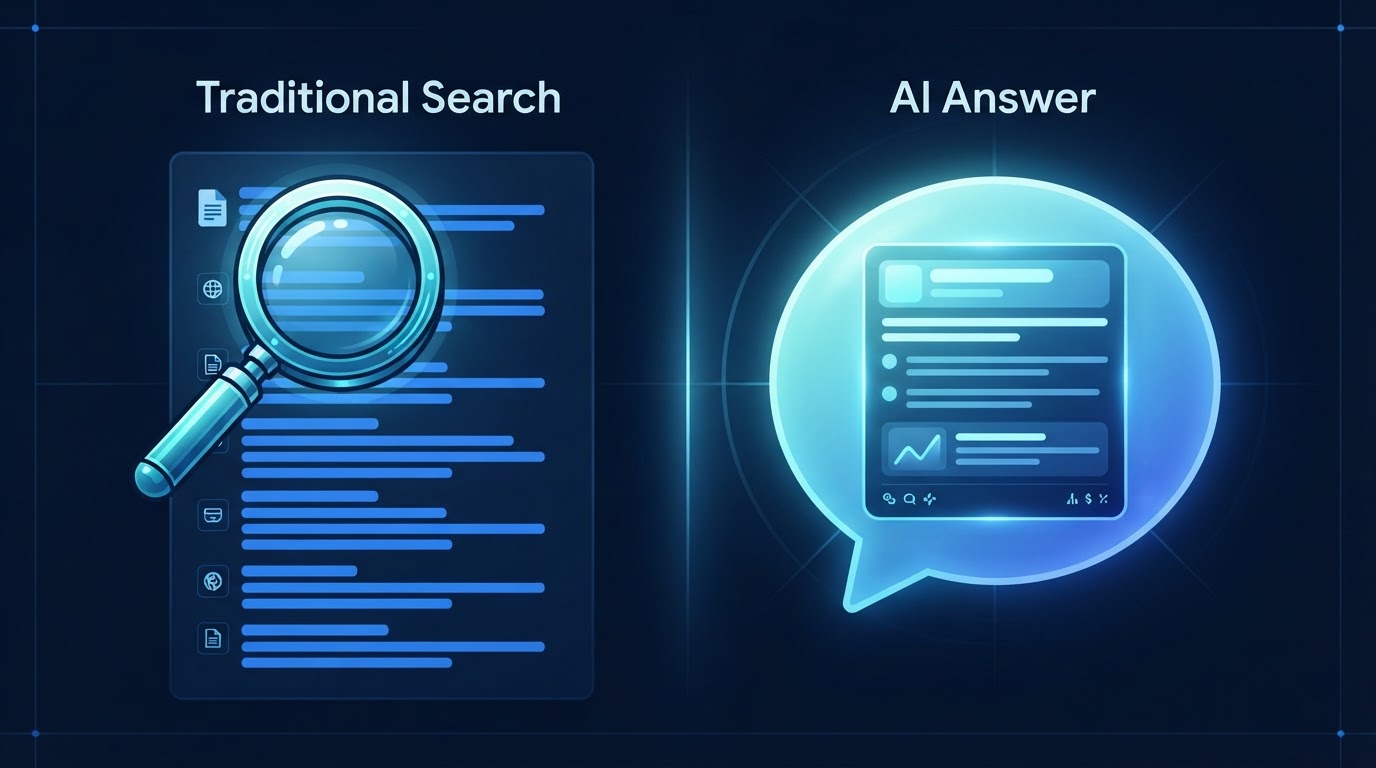
SEO helps your website appear in traditional search results. AEO helps make your business information useful and discoverable in AI-generated answers. That's the simplest way to understand the difference. SEO stands for Search Engine Optimization. AEO stands for Answer Engine Optimization.
Let's say you own an auto repair shop. Someone opens Google and searches, 'Auto repair shop near me.' Traditional SEO can help your business appear in the search results. Now imagine someone asks ChatGPT, 'What's a good auto repair shop nearby that specializes in Toyota vehicles?' AEO focuses on making it easier for AI-powered search tools to understand your business and whether you might be a relevant recommendation. Both searches could lead to new customers, but the way people ask questions and receive information is different.
How Does Traditional SEO Work?
Traditional SEO focuses on helping search engines discover and understand your website. It includes things like writing clear descriptions of your products and services, using helpful page titles and headings, making your website easy to use on mobile phones, improving website speed and navigation, earning relevant links from other websites, keeping local business information accurate, and publishing useful content people are searching for.
For example, if you own a roofing company in Nashville, you probably want your website to appear when someone searches 'roof replacement Nashville.' Good SEO can improve your ability to compete for relevant searches. However, nobody can guarantee a particular Google ranking.
How Does AEO Work?
AEO focuses on helping your business become relevant to questions asked through AI-powered search experiences. Instead of typing a few keywords, someone might ask, 'How do I know whether I should repair or replace my roof, and which companies nearby can help?' An AI search tool may explain the difference between repairs and replacement, then provide links or business recommendations. A company with helpful content about roof inspections, repair options, replacement costs, and service locations may be relevant to that answer.
AEO encourages businesses to provide clear information that answers real questions. But that doesn't mean creating a separate website just for AI. In many cases, improvements that help AEO also help SEO.
AEO vs. SEO: A Simple Comparison
SEO focuses on traditional search visibility and helps websites appear in search results. It often targets keywords and search topics, tracks rankings, impressions, clicks, and traffic, and relies on useful content and accessible websites. AEO focuses on answer-based and AI search visibility and helps information become relevant to AI-generated answers. It often focuses on natural questions and context, also looks at AI mentions, citations, and referrals, and also benefits from useful content and accessible websites. These aren't completely separate approaches. In fact, they share many of the same foundations.
Is SEO Going Away Because of AI?
No. People still use Google and other search engines to find businesses, compare products, get directions, read reviews, and visit websites. Google also uses many of its existing search systems to support AI-powered features. That means traditional SEO remains important.
What's changing is how some people interact with search results. Instead of clicking several websites to research a question, someone may receive an AI-generated explanation first. That answer may include links to businesses or other sources. For small businesses, the goal should be to remain visible and useful wherever customers are searching.
Does AEO Help With Google AI Overviews?
It can help you prepare your website for AI-powered discovery, but it doesn't guarantee inclusion. Google AI Overviews and AI Mode use search systems to find relevant information and provide helpful answers. Google recommends many of the same practices for these AI features as it does for traditional search. That includes accessible websites, original content, clear information, and accurate business details. There isn't a special AEO tag or secret markup that guarantees your website will be included.
What About GEO (Generative Engine Optimization)?
GEO is another term you'll probably hear. It stands for Generative Engine Optimization. GEO generally refers to improving how your information is discovered and represented in AI-generated responses. AEO and GEO overlap quite a bit. Some companies use AEO to describe answer-focused searches and GEO to describe AI-generated search experiences. For most small business owners, the distinction isn't especially important. What matters is whether customers can find accurate, helpful information about your business.
Should Small Businesses Focus on SEO or AEO First?
If your website is difficult to find in Google, has missing service pages, or doesn't work well on mobile devices, traditional SEO is usually the best place to start. Why? Because many of the same improvements also support AI-powered search. For example, imagine your website doesn't clearly explain what services you offer. You could pay for an AI visibility report, but the underlying problem would still exist. Start by fixing the website, then look at how your business appears across traditional and AI search.
Here's a practical order. First, make your website useful: clearly explain what your company does, who you help, and where you operate, and make it easy for people to contact you. Second, improve your traditional search presence: check your search visibility, Google Business Profile, main service pages, and website accessibility, and fix important problems before adding more content. Third, prepare for AI search: answer customer questions, publish real examples, maintain accurate information, and make sure your important pages are discoverable. Fourth, monitor results: watch traditional search traffic, relevant AI citations, referral sources, and customer inquiries. This approach helps you avoid spending money on separate services that may be fixing the same problems.
Can AEO Help My Business Get Recommended by ChatGPT?
Possibly. AEO-related improvements can make your information easier for AI search systems to discover and understand. For example, a website that clearly explains its services, locations, and customer questions provides more useful context than one filled with vague marketing slogans. But no business is guaranteed to appear in ChatGPT's recommendations. If you're interested in practical steps, read our guide on how to get your business recommended by ChatGPT. It explains how to make your website more accessible, improve your online business information, and test your current visibility.
What Should You Measure: Google Rankings or AI Mentions?
Both can be useful, but they tell you different things. Traditional SEO reporting often includes website impressions in Google, search clicks and organic visitors, keyword rankings, and calls, form submissions, and other inquiries. AI search reporting may include whether your business appears in answers to selected questions, whether AI tools cite your website, whether your company is described accurately, visitors arriving from identifiable AI referral sources, and inquiries associated with AI-powered discovery.
An AI mention isn't the same as a new customer. A website visitor isn't necessarily a sales opportunity, either. The most important question is whether your online presence helps the right people discover and contact your business.
Is AEO Just Another Marketing Buzzword?
It's reasonable to be skeptical. New technology often comes with new names, new services, and plenty of big promises. Some AEO recommendations are simply good SEO practices with a different label. Others involve newer types of monitoring, AI-specific discovery issues, and understanding how generated answers represent a business. The useful question isn't whether someone calls their service SEO, AEO, or GEO. It's what they're actually doing for your business. Ask what they'll change, why it matters, and how they'll measure progress. If someone promises guaranteed rankings in ChatGPT or every AI search platform, that's a reason to be cautious.
How Much Should a Small Business Spend on AEO?
There's no universal amount. If you already have a strong website, accurate business information, and helpful content, you may need only a few improvements and some periodic monitoring. If your website is outdated or difficult for search engines to access, you may have more work to do. Before paying for a service, understand exactly what you're buying. You shouldn't have to pay twice for the same website improvements just because one company calls them SEO and another calls them AEO.
The Bottom Line: Your Business Needs Both
SEO isn't dead, and AEO isn't a magic replacement. They're two ways of looking at a similar goal: helping customers find your business when they need what you offer. Good websites explain services clearly, answer questions, provide accurate information, and make contacting the business easy. Those basics matter whether a customer searches Google, asks ChatGPT, or discovers your business somewhere else.
Need Help Understanding Your Business's Search Visibility?
At Ollerton Marketing, we help small businesses improve their websites, traditional search presence, and readiness for AI-powered search. We believe business owners deserve clear explanations, useful work, and realistic expectations. Want to understand how your business appears in Google and AI search? Visit OllertonMarketing.com to learn how we can help.
Frequently Asked Questions
Is AEO replacing SEO?
No. AEO builds on many of the same foundations as traditional SEO. Businesses benefit from preparing for both traditional and AI-powered search.
Is AEO more expensive than SEO?
Not necessarily. Many improvements overlap, so the cost depends on what your website already needs.
Do I need separate SEO and AEO agencies?
Usually not. A capable provider should be able to explain how traditional search and AI search relate to your website.
Does AEO work for e-commerce businesses?
Yes. Online stores can benefit from accurate product information, useful descriptions, clear policies, and content that answers shopping questions.
Is ChatGPT SEO different from Google SEO?
There are differences in how the systems discover and present information, but both benefit from accurate, accessible, useful website content.
Can I rank number one in AI search?
AI-generated answers don't necessarily have fixed rankings like traditional search results. The businesses and sources mentioned can change depending on the question and context.
Want this working for your business?
Ollerton Marketing builds smart websites, AI chat, automations, and media buying for local businesses — plans start at $97/month.